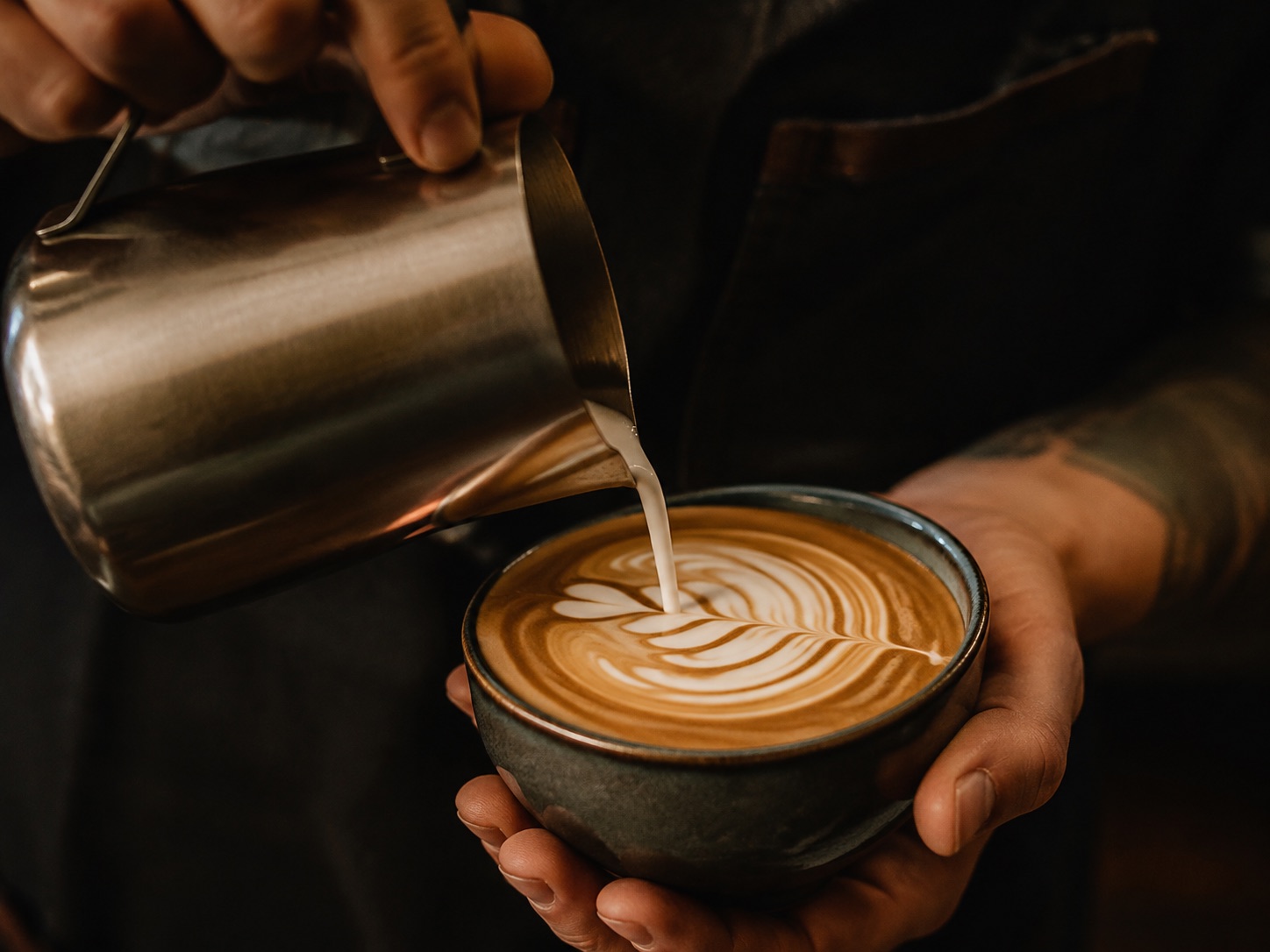
The goal of a first latte art attempt is usually easy to picture: a neat heart on the surface of the coffee. You move the pitcher, turn the cup and inspect the result. When the pattern does not appear as expected, it is tempting to blame the final movement. There is a calmer way to approach the practice: look at the texture and flow that came before the finished shape.
Instead of treating the pour as a performance, think of it as three connected parts. First comes milk preparation, then the relationship between pitcher and cup, and finally the completion of the pattern. Trying to improve every part at once can feel overwhelming. Choose one observation for each attempt. Watch whether the milk flows continuously on one pour, then pay attention to how you hold the cup on the next.
When you pick up the pitcher, notice its surface. Watch how the mixture moves. Does it look like separate layers of liquid and foam, or does it move together? You do not have to label the answer right or wrong immediately. Learning to see what is happening is the beginning of learning to adjust it. In a guided session, sharing this observation also makes feedback more specific and useful.
Find a comfortable position before you pour. Hold the cup and pitcher in a way that allows control without unnecessary tension in your wrist. Rather than speeding up, make the movement easier to follow. Notice where the stream meets the coffee, when it becomes visible on the surface and what your hand is doing at that moment. Several things are happening together; you do not need to master all of them on your first attempt.
Even when practising a heart, the aim of every pour does not have to be producing one. You might use a round to hold the cup more steadily. On another, focus on starting from a similar position. Small objectives make the finished picture only one measure of progress. The result may look imperfect while your movement has become more controlled. That is something useful to take into the next attempt.
Photographs can help, but a picture of the finished cup leaves much of the process out. Add a short note immediately afterwards. What did you try? Where did you lose control? What will you change next time? When practising with someone else, share one concrete observation. Saying that the flow looked steadier near the end gives more direction than a general verdict about whether the pattern was good.
A different milk or plant-based drink is a reason to observe again rather than expect an identical result. Share your preferences and equipment with the person guiding your session so the practice relates to your own routine. Learn the safe use of the equipment before working with steam or hot liquids, and follow its operating instructions.
The pleasure of latte art goes beyond making a photograph worth sharing. It is also the moment when an unfamiliar movement begins to make sense. Your first heart may be uneven, but the cup still carries something your hands have learned. Let the next attempt begin there.